Sunday, 25 October 2020

Saturday, 24 October 2020
Friday, 23 October 2020
Thursday, 22 October 2020
Tuesday, 20 October 2020
Monday, 19 October 2020
Sunday, 18 October 2020
TikTok: The story of a social media giant📱🎶
Link to artical: https://www.bbc.co.uk/news/technology-53640724
President Donald Trump has warned that he will ban TikTok unless an American firm buys its US operations. So how did an app attract millions of users but come to be seen as a national security risk in just two years?
Alone it stands, a red gummy bear atop a dimly lit stage, and the unmistakable voice of Adele singing. Then, as the unseen crowd joins in with the next line, the camera pans out to reveal hundreds more gummy bears singing along to Someone Like You.
It's silly and cute and extremely watchable. And for the fledgling video app TikTok, it did more in 15 seconds than marketing budgets of millions.
Posted in December 2018, it quickly racked up millions of views on the app but - more importantly - was picked up by thousands of copycats on other social networks.
The world was alerted to the app and TikTok has since attracted a vibrant, creative and young audience of hundreds of millions.
TikTok's origins are different to the fairytale start-up story we have heard before. This is not an empire built by a couple of friends with a great idea in their mum's garage.
It actually started life as three different apps.
The first was an app called Musical.ly, which launched in Shanghai in 2014 but had strong US business links and a healthy audience in that key market.
In 2016, Chinese tech giant ByteDance launched a similar service in China called Douyin. It attracted 100 million users in China and Thailand in the space of a year.
ByteDance decided it was onto something and wanted to expand under a different brand - TikTok. So, in 2018 it bought Musical.ly, folded it in, and began TikTok's global expansion.
TikTok's secret lies in its use of music and an extraordinarily powerful algorithm, which learns what content users like to see far faster than many other apps.
Users can choose from a huge database of songs, filters and movie clips to lipsync to.
It's inspired some huge trends like Lil Nas X's Old Town Road or Curtis Roach's Bored in the House. Even the BBC News theme tune went viral as Brits made light of daily coronavirus briefings.
Many people will spend most of the time on the For You Page. This is where the algorithm puts content in front of users, anticipating what they will enjoy based on content they have already engaged with.
It's also where it shows content it thinks could go viral. The idea is that if the content is good it will travel, regardless of how many followers the creator has.
Many TikTok communities have emerged, brought together by the types of content they enjoy or their sense of identity.
Communities like "Alt" or "Deep" often feature creators who aren't necessarily looking to fill their wallets but who are simply on the platform to make funny or informative content. For them, it's not about winning the attention of big brands - it's about finding like-minded people.
The growth of TikTok and its sister app Douyin have been rapid.
In July last year the apps already had one billion downloads worldwide, of which 500 million were active users. A year later they were on two billion downloads and about 800 million active users.
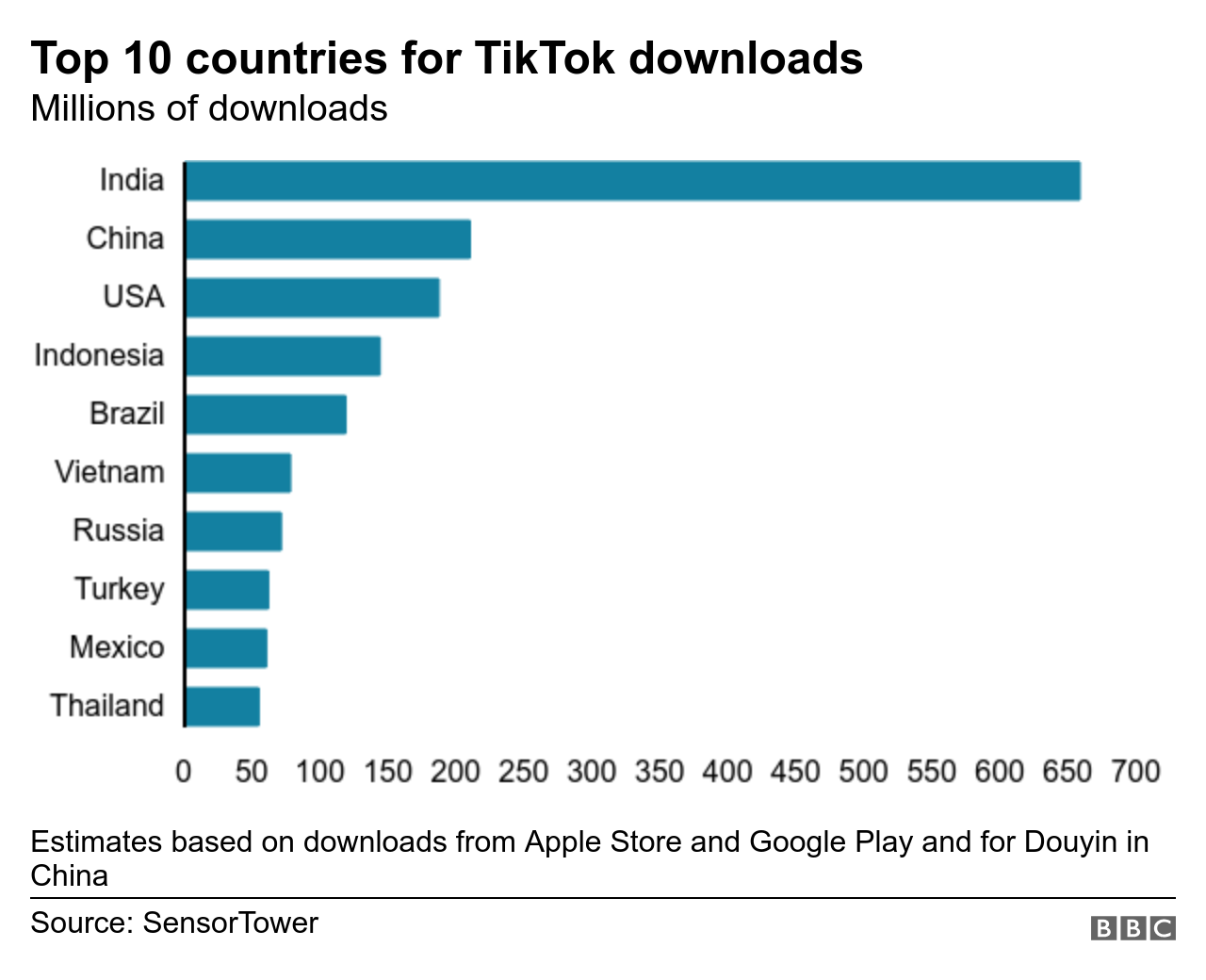
The app's rapid growth has also put TikTok at the forefront of the minds of politicians. What does it mean to have a Chinese app so quickly become a large part of modern life?
To read more go to https://www.bbc.co.uk/news/technology-53640724
Go check out my titkok accounts!
@xsophiatx123
@xsophiatx
Monday, 5 October 2020
Saturday, 3 October 2020
Friday, 2 October 2020
Thursday, 1 October 2020
Subscribe to:
Comments (Atom)